What to Remember When the Contest Results Are Announced
At some point today, someone will read the results.
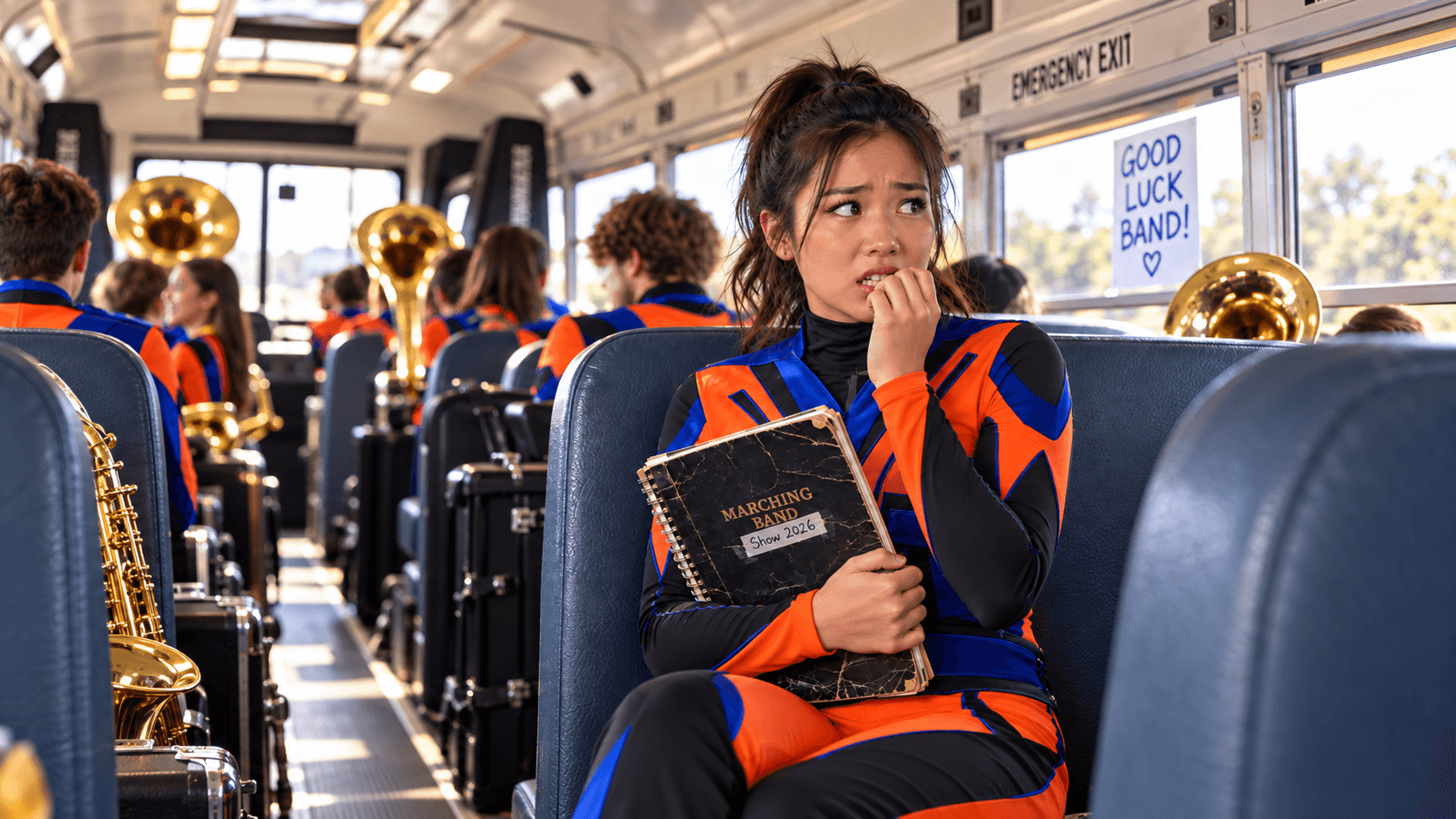
Maybe you will be standing with your band on the field. Maybe you will hear the announcement from the stands. Maybe someone on the bus will refresh their phone and tell everyone at once.
Before that happens, you probably already have a number in your head.
First place.
A higher score than last time.
A spot in finals.
Maybe you are trying not to think about the results at all, but you still know how much you want to hear your group’s name.
Wanting to win is okay.
You have spent too many hours rehearsing to pretend the outcome means nothing.
But when the results come, there is something else you get to decide: Who will you be in that moment?
If Your Name Is Called
Celebrate.
Cheer for your friends. Hug the person next to you. Take a picture with the trophy. Call home and tell someone what happened.
You earned the right to enjoy that moment.
Just remember that another group is hearing the same announcement differently.
Their students also woke up early. They also practiced in the heat, repeated difficult passages, fixed mistakes, and hoped the judges would notice how far they had come.
You do not have to make your celebration smaller.
You can make it kinder.
Cheer without mocking another group. Post the picture without making a joke about someone else’s score. If you pass another band on your way back to the bus, treat them with respect.
The way you win will be remembered, too.
If Your Name Is Not Called
It may hurt more than you expected.
Maybe you thought this was your best performance of the season. Maybe you were sure your group would make finals. Maybe you can still feel the moment you missed an entrance, and now you are wondering whether it was your fault.
Take a breath.
One missed note did not decide the value of your entire season.
Neither did one score.
It is okay to be disappointed. It is okay to be quiet for a while. You do not owe anyone a cheerful speech on the walk back to the bus.
But try not to turn that disappointment against yourself or the people who performed beside you.
You were part of the same show. You got through it together.
Do Not Put the Whole Result on One Person
After a contest, it is easy to search for a reason.
Someone dropped a toss. Someone came in late. Someone missed a set. Someone had a rough solo. Sometimes that someone is you.
But a performance is made of hundreds of moments and hundreds of people. You cannot explain an entire result by pointing to one mistake you saw—or one you made.
Think about what you would want a teammate to say if you had the hardest moment of the day.
You can give them that same kindness.
There will be time to review the performance and work on what needs fixing. On the ride home, the person beside you may simply need a friend.
Listen to the Feedback When You Are Ready
Contest results can tell you where your group placed today. Judges’ comments may help explain what they heard and saw.
Listen when your director talks with you about them. There may be something encouraging in those comments that the score does not show. There may also be work to do.
You can be proud of a performance and still want to improve it.
You can be disappointed by a result and still recognize how much better your group has become.
Both things can be true.
Look Around the Bus
On the way home, the mood may be loud and joyful. It may be quiet. It may change from one row to the next.
Look around.
The people on this bus know what the season took. They remember the rehearsal when the show could barely make it to the end. They remember the first time a difficult section finally clicked. They know who kept trying after a hard day and who stayed to help carry the equipment.
If you won, thank them.
If you lost, stay close to them.
The result belongs to the group, but so does everything you built along the way.
What You Take Home
Someday, you may forget the exact score from this contest.
You may still remember the sound of the crowd when your show began. You may remember a friend squeezing your hand before you stepped onto the field. You may remember how it felt when the final note rang out and you knew you had given everything you had.
Try to take those moments home with you, whatever the announcement says.
Celebrate a win without putting someone else down.
Feel a loss without deciding that you are a failure.
Learn what you can.
Then thank the people who shared the field, the stage, and the bus with you.
That is the art of winning and losing.
And you get another chance to practice it every time you perform.