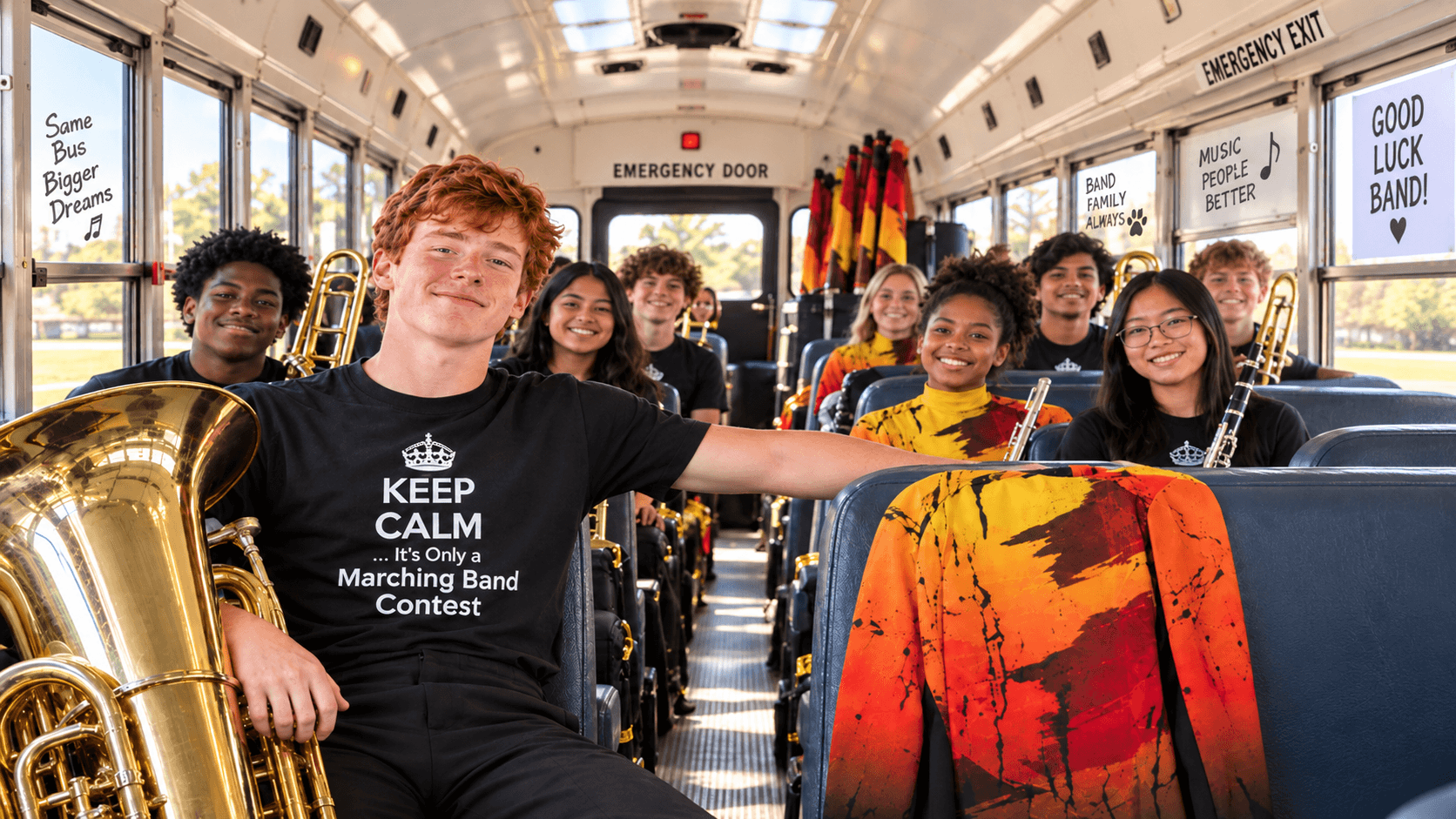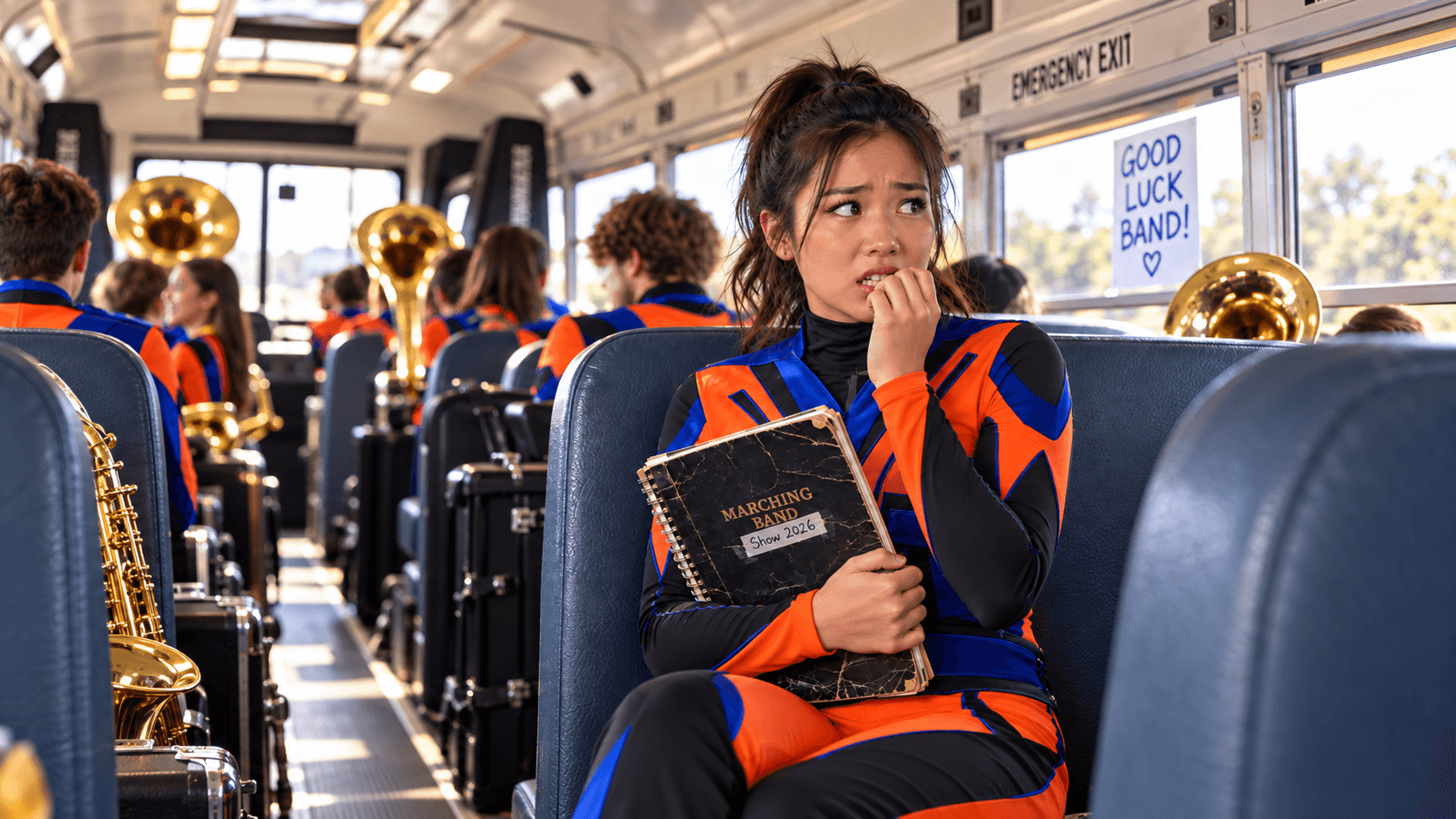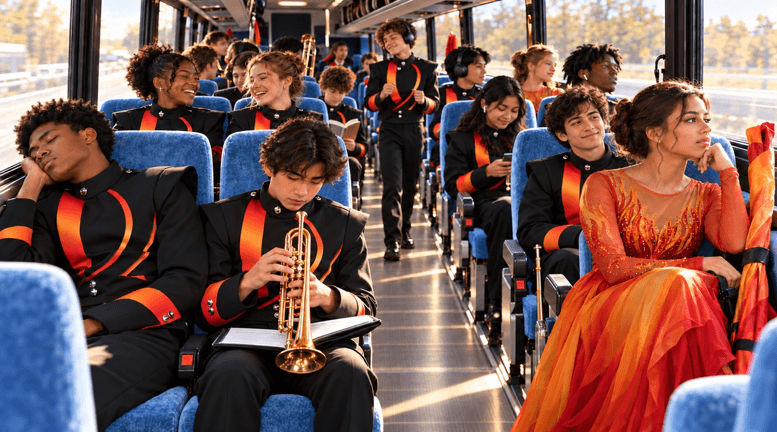
The band finishes.
The crowd erupts.
And somewhere in the stands, a parent is probably thinking:
That was wonderful.
But after all the rehearsals, band camps, private lessons, Friday nights, Saturday contests, uniforms, travel, equipment, and countless hours of practice...
will any of this actually help when college comes around?
For parents and band members, that is an important question.
And the answer may be more encouraging than you think.
Marching band can become much more than a great high school experience. It can help create college opportunities, scholarship possibilities, campus connections, and even opportunities to be noticed by college music programs.
Colleges Notice More Than Grades
Grades matter.
Courses matter.
Academic performance matters.
But colleges are also interested in something else: What did this applicant care enough about to stick with?
Marching band tells quite a story.
A band member who has spent several years in a program has demonstrated commitment.
They've learned to show up.
They've learned to prepare.
They've learned to accept correction.
They've learned to work with other people.
They've learned to manage schoolwork while rehearsing several days a week.
And they've learned that sometimes an entire group depends upon them being in exactly the right place at exactly the right moment.
Those qualities don't disappear when the uniform comes off.
They become part of the band member's college story.
Band Members Build Strong Habits
Years of music participation require concentration, memory, discipline, listening, problem-solving, and persistence.
Those skills help in rehearsal.
They're also pretty useful in algebra.
And chemistry.
And English.
And almost everything else.
Band members learn very early that improvement doesn't happen because you hope for it.
You practice.
You make a mistake.
You fix it.
Then you do it again.
That habit of preparation can carry far beyond the marching field.
Then There Are the Scholarships
Now we get to the part that gets every parent's attention.
College costs.
Music can create scholarship opportunities that families may not initially realize exist.
Some colleges offer scholarships to band members who plan to major in music.
Others offer financial awards to talented musicians who major in something completely different.
A future engineer may still receive support for playing trumpet.
A future nurse may continue playing clarinet.
A business major may play percussion.
A pre-med major may spend Saturday afternoons in the university marching band.
The important point is this: A band member does not always have to become a music major for music to remain valuable in college.
The College Marching Band May Want Them
Colleges need musicians.
Marching bands need musicians.
Pep bands need musicians.
Concert bands need musicians.
Jazz ensembles need musicians.
That creates opportunities.
Depending upon the institution, those opportunities may include scholarships, stipends, participation awards, or other forms of financial support.
And sometimes the greatest benefit isn't financial.
Joining a college band can give a first-year college band member an immediate community.
Before classes even begin, they may already know dozens—or even hundreds—of people.
For someone leaving home for the first time, that can be enormously valuable.
Music Majors Have Even More Possibilities
For the band member considering music as a career, the opportunities become broader.
Colleges recruit young musicians interested in:
Instrumental performance.
Music education.
Composition.
Conducting.
Jazz.
Music technology.
Commercial music.
And many other areas.
Scholarships may be based upon auditions, academics, leadership, financial need, the needs of an ensemble, or a combination of several factors.
And there is something parents and band members should understand:
The search should not begin in the spring of junior year.
It should begin much earlier.
Don't Wait Until Senior Year
One of the biggest mistakes a family can make is assuming that college music opportunities begin when college applications open.
By then, valuable time may already have been lost.
Band members can start preparing earlier by asking:
What colleges have programs that interest me?
What will I need to prepare for an audition?
What solos should I be learning?
Does the college offer scholarships for non-music majors?
Does it have a marching band?
Can I audition before applying?
Are there scholarships for my instrument?
When should I begin contacting college music programs?
Those are much better questions to ask during sophomore and junior year than a few weeks before an application deadline.
A Performance Video Can Open a Door
For a band member hoping to be noticed by a college music program, one of the most valuable things they can have is a strong performance video.
It doesn't need to be a Hollywood production.
It needs to show what the band member can do.
A recruiter hundreds of miles away cannot hear someone practice at home.
They cannot attend every concert.
They cannot visit every high school.
But they can watch a video.
And that can turn a name on a screen into a musician they want to learn more about.
That's Where Accoladi Comes In
Accoladi.com was created to help band members and their families better understand and navigate this process.
Band members can create a performing-arts profile, showcase accomplishments, add performance videos, explore colleges, research scholarships, and learn more about preparing for collegiate music opportunities.
College recruiters can also discover band members whose abilities and interests may fit their programs.
Think of it as helping make an introduction.
The band member still has to practice.
They still have to prepare.
They still have to audition.
They still have to earn the opportunity.
But first, colleges have to know they exist.
So, Look Back at the Field
The next band is probably getting ready.
Maybe you can already see them standing near the end zone.
Somewhere in that group may be a future music educator.
A physician.
An engineer.
A lawyer.
A professional musician.
A teacher.
A computer scientist.
Most of the band members on the field will eventually choose careers outside of music.
But the instrument they're carrying tonight may still help them get where they're going.
That saxophone might lead to a college ensemble.
That trumpet might lead to an audition.
That clarinet might lead to a recruiter.
That drum might lead to a scholarship.
And all those hours spent rehearsing may turn out to have accomplished considerably more than preparing eight minutes of music and drill.
So, Is Marching Band Worth It?
Only each family can answer that.
But when college approaches, don't make the mistake of thinking marching band simply ends after high school.
For many band members, it doesn't.
It becomes part of their college application.
Part of their college experience.
Sometimes part of their career.
And occasionally— part of the way they help pay for college.
So while you're waiting for the next band to take the field, take another look at the one that just marched off.
Some of those band members may already be marching toward opportunities they don't even know exist yet.